Get ready to dive into the money talk that’s open to everyone—no suits or ties needed!
JOIN US ONLINE FOR OUR NEW WEBINAR — MONEY TALKS
Join our Realty411 webinar and learn all about using Hard Money Lending for your real estate investment deals. We will go over the use of hard money: when to leverage, how to leverage, and when the use of hard money makes sense.
Our virtual session: Money Talks, is a great place to learn more about finance for real estate transactions. Learn about all your options, here! Be sure to join us for this special webinar all about Hard Money Lending.
Every online event we host is different and unique with different information and guests. Be sure to join us for our newest session: Money Talks.
OUR FEATURED SPEAKER: AMANDA HART – Easy Street Capital
A dancer since age nine, Amanda Hart received my BFA in Dance from the California Institute of the Arts in 2005 and established her non-profit Hart Pulse Dance Company and annual MixMatch Dance Festival. In 2015 she made a shift in her full-time dance career and decided to pursue her love for the car world by joining the sales team at the nation’s #1 Audi dealership, Audi Beverly Hills.
She spent just over 5 years as one of Audi Beverly Hill’s top Internet Sales Managers before once again shifting gears and joining Sovereign Lending Group as a licensed Mortgage Loan Originator, specializing in Conventional, FHA, VA, and Jumbo loans . At the end of 2021, she stepped up to Hard Money lending with Easy Street Capital, now working exclusively with investors on their rehabs, rentals, and new build construction goals. Amanda recently sold her LTR in Encino, CA and currently manages her Dallas, TX Mid Term Rental (MTR).
Real estate is one of the best investment vehicles to make an income from. With a variety of different methods available, real estate is very versatile and flexible for all types of investors. When it comes to investing in real estate, it is always a good place to start by evaluating your current financial and life situation along with what your goals are. Are you financially secure? How does your partner feel about investing? Would you like to be passive or hands-on? These are some of the many questions you must ask yourself before investing in real estate. Once answered, you can now make a better decision around which method you’d like to pursue when it comes to making money in real estate.
article continues after advertisement
Rental Property Investing
If producing a consistent source of income every month is important to you, then you may want to look at the method of investing in rental properties. When looking for rental properties, you want to first make sure that you are purchasing a good deal. You may either use financing or cash to purchase the property. When choosing a property to purchase, you should confirm what the rental rates are for similar properties. When you rent out the property, you should charge rent based on the market rate but also confirm that this is enough to cover your expenses for the rental property. Anything left over is your profit. How much you want to earn per deal should be the criteria you establish. It is important to run the numbers before purchasing a rental property. Essentially, this is a very straightforward approach to real estate investing and could potentially produce a significant source of income over time.
Fix and Flip
A commonly known strategy for making money in real estate is the traditional fix and flip. To complete a successful fix and flip, an investor must purchase a property at a discount price, renovate the home, and then put it back on the market at a higher price for a profit. You get to keep the difference between your cost and what you sell for. Fix and flips are a good opportunity to make a significant amount of money in a transaction. Sometimes the fixing up required for a home comes down to minor cosmetics such as replacing the flooring, putting on a fresh coat of paint and updating the kitchen or bathroom. Note, when investing in fixing and flips, it is important to have a firm understanding of what the scope of the project may be. You should walk the property with a contractor before purchasing to get a good estimate on what your costs may be.
article continues after advertisement
REIT Investing
One of the most basic forms of investing in real estate and also the most passive is buying into REITs. A REIT is a real estate investment trust which is a company that owns and operates income-producing real estate. Shares can be purchased like a stock. In return, you are rewarded with dividends either monthly or quarterly from the income produced by the REIT.
Joe Arias
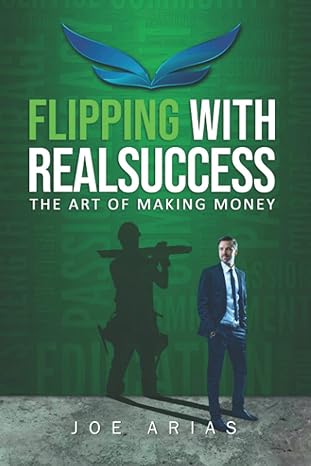
Joe Arias and his partners have flipped hundreds of properties in the Southern California Region. He has developed cutting-edge systems to simplify and scale the entire remodel process that can easily be applied to flipping, rentals, wholesaling, and other passive income strategies. More recently, Joe founded a real estate investing education company called RealSuccess Investments, allowing him to share his tools and systems with hundreds of up-and-coming investors.
RealSuccess is focused on education on flipping, rentals, passive income, and wholesaling.
Joe is also a best-selling author. He has written 4 books: Finding your RealSuccess, First Steps to Flipping,R stands for RentalsandRetirement, and Wholesaling Real Estate.
“I came from Argentina when I was 20, I am 40 years old now. I didn’t know anyone. If I can do it, anyone can.”
From a young Latino immigrant to a celebrated real estate investor, Joe is a true testament to hard work and discipline. As an investor, he has made it his mission to help others achieve financial freedom while enjoying living a life of passion, fulfillment, and empowerment.
Learn live and in real-time with Realty411. Be sure to register for our next virtual and in-person events. For all the details, please visit Realty411Expo.com or our Eventbrite landing page, CLICK HERE.
https://www.realestateinvestormagazines.com/wp-content/uploads/2026/05/real-estate-money-1.jpg4001000dulcehttp://www.realestateinvestormagazines.com/wp-content/uploads/2013/04/logo.pngdulce2026-05-20 02:47:542026-05-20 02:49:39Basic Methods of Making Money in Real Estate
In today’s world, there are seemingly monopolies growing in almost every field where a product or service is offered. If so, it’s the consumer who ends up paying more money due to less competition.
Whether it’s one, two, three, five, or 10 companies or corporations controlling the market share for products or services like soda drinks, electric cars, electricity, AI technologies, ice cream, banking, or real estate, the declining number of competition for many of these mega-corporations worth billions or trillions can keep the prices higher than normal for consumers.
As most of us see firsthand on a daily basis, inflation rages onward as the dollar’s purchasing power keeps declining, and the prices paid for products or services skyrockets. Who doesn’t want to pay less money for a product or service instead of seeing corporations create more record profits?
article continues after advertisement
Increasing Litigation Concerns for Employers and Agents
We’re starting to see more and more lawsuits filed across the nation that are making similar claims about unfair monopoly-like control of various product or service sectors. Additionally, there are anti-steering violation allegations being made that may include the same in-house real estate brokerage ownership of affiliate companies that are also financially benefitting, while consumers are paying higher costs as a result.
For example, this recent lawsuit filed against Rocket Mortgage by the law firm Hagens Berman on behalf of numerous consumers focuses on potential anti-steering and kickback violations with larger lenders, brokerage firms, and their third-party affiliates. One core claim made in this lawsuit was that Rocket was possibly paying referrals to agents for buyer mortgage applicants in exchange for steering them towards Rocket.
Hagens Berman, which also represented home sellers in a class-action lawsuit against the National Association of Realtors that alleged real estate brokerage companies were conspiring to inflate real estate commissions and later settled in 2024 for $418 million, has yet to prove anything in court against Rocket as of this publication date. In a court of law, one is innocent until later proven guilty or the case settles out of court.
There are other lawsuits out there being filed against real estate brokerage firms, insurance offices, and other companies that are making claims that the client’s best interests aren’t being protected because they may be paying much higher mortgage rates and fees that are split amongst the affiliate businesses under the same corporate ownership interests.
If the parent company is named as a defendant in a lawsuit, the odds are quite high that the employed individual real estate agent who worked directly with the unhappy client will be named in the costly lawsuit as well.
Anti-Steering Risks and In-House Affiliates
Anti-steering laws, primarily under the Truth-in-Lending Act (TILA/Regulation Z) and the Dodd-Frank Act, prohibit mortgage originators from steering borrowers towards loans with less favorable terms to gain higher compensation or profits. Brokers are required to present loan options with the lowest interest rate, points, and fees that are the safest for their borrower clients.
If you can visualize someone “steering” in a car, or leading them by a figurative hand, to an affiliate third-party lender owned by their same employing broker, while knowing that the rates and fees are generally higher than nearby independent mortgage brokers, this is an easy way to simplify it.
The Truth in Lending Act (TILA) is implemented by the Board’s Regulation Z (12 CFR Part 226). A principal purpose of TILA is to promote the informed use of consumer credit by requiring disclosures about its terms and cost. TILA also includes substantive protections. For example, the act and regulation give consumers the right to cancel certain credit transactions that involve a lien on a consumer’s principal dwelling.
Regulation Z also prohibits specific acts and practices in connection with an extension of credit secured by a consumer’s dwelling.
Prohibitions related to mortgage originator compensation and steering
Regulation Z prohibits certain practices relating to payments made to compensate mortgage brokers and other loan originators. The goal of the amendments is to protect consumers in the mortgage market from unfair practices involving compensation paid to loan originators.
The prohibitions related to mortgage originator compensation and steering apply to closed-end consumer loans secured by a dwelling or real property that includes a dwelling.”
Anti-Discrimination Claims
Now, let’s focus on how potential monopolies and the control of in-house third-party services in sectors like the real estate, insurance, and mortgage fields can drive prices higher for consumers in spite of the potential violation of RESPA, the Fair Housing Act, the Sherman Anti-Trust Act of 1890, and other federal and state regulations.
To simplify for the Fair Housing Act (Federal Fair Housing Act of 1968), it originated as part of the Civil Rights Act (Title VIII). This Act prohibits discrimination in the sale, rental, financing, or housing based on race, color, religion, gender, national origin, familial status, or disability.
As per the Fair Housing Act, the higher charging of rates or fees for real estate commissions, mortgage brokerage fees, insurance, or other third-party affiliate services offered by the same parent umbrella-like corporation can be alleged by some to be discriminatory as well as fraudulent.
As I’ve shared before, I’ve written numerous real estate licensing courses in most states as well as college textbooks for the two largest real estate publishers in the nation as well as for the oldest and best-known real estate school in California.
Lawsuits filed that allege the violation of discrimination can later lead to millions of dollars’ worth of future courtroom judgments. It’s very wise to research any potential state or federal violation risks associated with referring a client to an affiliate business, while profiting at the same time with undisclosed financial gains, in order to minimize your financial and legal risks.
I’ve often asked for many years the following question, “How do so many large real estate brokerage offices own and control affiliate in-house mortgage, escrow (a key description is usually “independent” and “neutral”), insurance, and/or inspection businesses and not potentially violate various anti-monopoly or anti-steering laws?”
RESPA and Kickbacks
It’s unlawful for a licensed real estate, insurance, or mortgage professional to receive profits or referrals from a transaction that aren’t fully disclosed in writing and shared with the client. These hidden “kickbacks” or undisclosed profits can later be used in a lawsuit and also put someone’s professional license at risk for being suspended or revoked.
The Real Estate Settlement Procedures Act (RESPA) provides consumers with improved disclosures of settlement costs and to reduce the costs of closing by the elimination of referral fees and kickbacks.
RESPA was signed into law in December 1974, and became effective on June 20, 1975. The law has gone through a number of changes and amendments since then, all with the intent of informing consumers of their settlement costs and prohibiting kickbacks that can increase the cost of obtaining a mortgage.
RESPA covers loans secured with a mortgage placed on one-to-four family residential properties.”
Monopolies Harm Consumers
The more competition there is from numerous businesses offering similar products or services, the more likely that the prices will be lower and better for consumers.
A monopoly may exist when a single company or corporation has exclusive control over a product or service in a market region with minimal competition, partly due to their actions that make it more challenging for customers to seek out other products or services. If so, this allows the business to charge much higher prices because of the perceived limited access to other product or service choices.
After the passage of the Sherman Anti-Trust Act of 1890, it gave more power to the federal government to bring legal action against trusts or other entities that were declared “in restraint of trade or commerce among the several states, or with foreign nations.” Initially, this law was passed to slow down JP Morgan and John D. Rockefeller’s consolidation of wealth by way of multiple industry monopolies across the nation.
The merging of more and more large brokerage and financial companies across the nation seems to be creating an increasing number of monopolies in these fields. How is this truly fair and in a clients’ best interests to have fewer choices, while paying higher costs?
Duties and Clients’ Best Interests
Licensed real estate professionals owe their clients certain fiduciary duties or legal obligations to act in their clients’ best interests. Many times, these fiduciary duties owned by a real estate agent to their clients can be summarized by the acronym OLDCAR as follows:
Obedience: Carrying out all lawful instructions requested by the client.
Loyalty: Placing the client’s interests above all others, including the agent’s own.
Disclosure: Revealing all known or potential risks such as property defects, outdoor environmental concerns, competing offers, or agent relationships with others.
Confidentiality: Keeping client information, such as financial information or motivation, confidential, even after the relationship ends.
Accounting: Safeguarding and reporting all money or documents entrusted to the agent.
Reasonable Care and Diligence: Acting with skill, care, and diligence in order to protect the client.
If an agent knows that rates and fees charged for in-house mortgages, insurance, or other services are higher than other nearby services offered by independent companies, this seems to not closely follow the “acting in the client’s best interest” mantra or duty owed.
article continues after advertisement
The Benefits of Smaller Mortgage Companies
Here are some key points where smaller independent mortgage brokers may be the best choice for buyers, sellers, and advising real estate agents:
● Overhead costs are much lower for small mortgage shops. For some larger corporate real estate brokerage firms, they may be faced with hundreds of thousands to millions of dollars’ worth of monthly expenses that they must cover from multiple revenue streams related to all of their third-party affiliates. ● Because the monthly overhead costs are lower for small mortgage shops, many of them can afford to offer the lowest rates and fees to their borrowers. ● Small mortgage shops typically move much quicker than larger retail mortgage lenders and can close loans in two weeks or less. ● Smaller mortgage shops usually have much more experienced mortgage brokers working there with upwards of decades’ worth of experience. Anyone who can survive the ups and downs or the mortgage brokerage world for more than five or 10 years must be doing something right. ● Experienced and independent mortgage brokers are more likely to have purchased real estate themselves and can be much more helpful advising their clients and agents through the closing process.
When in doubt as it relates to your clients, please remember to “disclose, disclose, and disclose” all of your financial interests and potential profits as well as truly act in your clients’ best interests by referring them to your most trusted and affordable mortgage brokers or other third-parties.
Rick Tobin
Rick Tobin has worked in the real estate, financial, investment, and writing fields for the past 30+ years. He’s held eight (8) different real estate, securities, and mortgage brokerage licenses to date and is a graduate of the University of Southern California.
Rick provides creative residential and commercial mortgage solutions for clients across the nation. He’s also written college textbooks and real estate licensing courses in most states for the two largest real estate publishers in the nation; the oldest real estate school in California; and the first online real estate school in California.
Please join my So-Cal Real Estate Investors group that meets at Canyon Lake Golf & Country Club, Shoreline Yacht Club in Long Beach, and online: So-Cal Real Estate Investors.
https://www.realestateinvestormagazines.com/wp-content/uploads/2026/02/risk.jpg4001000dulcehttp://www.realestateinvestormagazines.com/wp-content/uploads/2013/04/logo.pngdulce2026-02-07 06:56:142026-02-07 06:57:37Understanding Risks of Affiliate In-House Brokerage Referrals or Kickbacks
Kylie Jenner, Sean Hannity & Zohran Mamdani made real estate news in January. Top 10 Celebrity Real Estate News is featured at TopTenRealEstateDeals.com.
Kylie Jenner Asks $48 Million for Current Mansion Kylie Jenner is one of the richest women in the world with her cosmetics business, real estate and reality TV. Her real estate holdings are worth close to $100 million, and she is moving into her new 18,000-square-foot, custom-built home in LA’s exclusive Hidden Hills neighborhood and selling her also-exclusive Holmby Hills mansion in the San Fernando Valley. She is asking $48 million for the 15,350-square-foot home she bought in 2020 for $36.5 million.
Johnny Carson’s Mid-Century Modern In the early 1970s, Johnny Carson bought a mid-century-modern home in the ritzy East Gate community in LA’s Bel Air neighborhood, where he lived with his third wife, Joanna. Built in 1950 on 1.5 acres, the 9,000-square-foot home includes six bedrooms and 11 baths with a separate two-story guesthouse and a tennis court. The home is for sale at $39.995 million, with proceeds going to charity.
Gene Hackman’s Death Home For Sale Gene Hackman’s Santa Fe home has come on the market for $6.25 million. It is the home where Hackman and his wife, Betsy Arakawa, died in 2025. Hackman bought the 53-acre property in the 1990s and later added a three-bedroom primary residence and a studio. The property also features a three-bedroom guesthouse, a lap pool, a hot tub, and a putting green. The home came on the market on January 16th and had a pending sales agreement by January 27th.
NYC Mayor Moves From Tiny Apartment To Huge Gracie Mansion Recently inaugurated New York City Mayor Zohran Mamdani has moved from a tiny and leaky, rent-controlled apartment in Queens to the 11,000-square-foot Gracie Mansion. Mamdani and his wife, Rama Duwaji, had been living in an 800-square-foot apartment until the move to Gracie Mansion. The mansion has served as the official mayor’s residence since 1942.
“The Fresh Prince of Bel Air” TV Home Hits Market The home seen in The Fresh Prince of Bel Air television show, which was broadcast on NBC from 1990 to 1996 and made Will Smith a star, is for sale for the first time in almost 50 years. The 10,000-square-foot home, which is actually located in LA’s Brentwood neighborhood, has six bedrooms, a maid’s quarters, and a backyard pool. The asking price is $30 million.
Sean Hannity Sets Record Price Near Palm Beach According to the Palm Beach Daily News, Sean Hannity recently paid $44.9 million for an oceanfront, eight-bedroom home with over 20,000 square feet in Manalapan, Florida. The property runs from the ocean to the Intracoastal, where he has 150’ of waterfrontage. It is the most expensive home ever sold in Manalapan, situated just south of Palm Beach.
article continues after advertisement
P. Diddy Yanks Beverly Hills Mansion, Again Sean ‘Diddy’ Combs has taken his 17,000-square-foot home off the market for a second time. Sean first listed the home in 2024, shortly before he was arrested and sentenced to 50 months in jail and a $500,000 fine. The 10-bedroom home in Beverly Hills’ exclusive Holmby Hills neighborhood was priced at $61.5 million.
Mickey Rourke’s Sad Home Eviction At one time, Mickey Rourke was one of the top actors in the world, starring in movies such as Body Double, Man on Fire, and Diner. Mickey, who has been out of work for most of the last decade, hasn’t paid his rent since 2016. He is facing eviction from his $7,000-per-month LA home.
Floyd Mayweather’s Emergency Home Mortgages Despite earning over one billion dollars in his boxing paychecks, Business Insider reports that the #1 boxer of the last 20 years, who retired with a 50-0 record, Floyd Mayweather, has money problems. According to Business Insider, “Mayweather took out millions in mortgages on his homes last year and has also faced a string of lawsuits and liens that claim he owes money for a Mercedes Maybach G-Wagon, jet fuel, and garbage collection at his Las Vegas mansion.”
Disney CEO Asking $15 Million Former Disney CEO Bob Chapek is asking $15 million for his ranch-style home in Westlake Village. With Santa Monica Mountain views, almost 10,000 square feet and four bedrooms, there is also a two-bedroom guesthouse, a family room, an outdoor living room with a kitchen, and a pool. Westlake Village is located in Los Angeles County in the celebrity-popular North Ranch Country Club Estates community, which has also been home to actress Heather Locklear and former LA Rams wide receiver Cooper Kupp.
For investment property owners, especially first-time landlords, every upgrade decision carries a risk: spend too little and the unit stays hard to rent, spend too much and the numbers stop working. The real challenge is separating improvements that look impressive from ROI-focused home improvements that actually drive property value enhancement and stronger tenant demand. With the right rental property upgrades, a real estate investment strategy becomes more predictable and easier to scale. The goal is simple: put money into the property where it pays back.
article continues after advertisement
Quick Summary: Smart Upgrades That Add Value
Upgrade flooring to refresh interiors quickly and improve perceived quality.
Add cost-effective storage solutions to increase usability and attract more renters or buyers.
Improve energy efficiency to lower operating costs and strengthen long-term value.
Remodel the kitchen strategically to capture strong ROI without overbuilding.
Boost curb appeal and install smart home features to stand out and justify higher pricing.
Understanding Cost vs. Value Upgrade Priorities
To set a smart baseline.
A practical way to choose upgrades is cost-vs.-value thinking: compare what a project costs with what it adds back in resale or rent appeal. Tools that estimate average ROI percentage help you rank projects before you spend. Then zoom out and include appliance age, likely repairs, and a plan for surprises.
This matters because the “best” upgrade is not always the fanciest one. It is the one that raises value while lowering future headaches and vacancy risk. Setting a repair budget and considering comprehensive home warranty coverage can keep one breakdown from wrecking cash flow.
Picture two choices: new quartz counters or replacing a 12-year-old water heater. Counters may photograph well, but the old heater has a higher failure risk and can trigger emergency spending. With cost-vs.-value thinking, you fund the higher-impact win first, then polish.
Assess → Plan → Schedule → Hire → Finish
A good upgrade plan is only useful if you can run it repeatedly, property after property. This staged workflow turns a property assessment checklist into a clear upgrade project timeline, aligned budget planning for renovations, and a simple contractor selection process.
Run the stages in order, then loop back after each unit turnover or annual inspection. Each pass tightens your estimates, shortens downtime, and keeps decisions consistent across projects.
Turn Your Upgrade Plan Into Weekend-Friendly Projects
These steps help you knock out high-impact upgrades in a repeatable way, even if you are new to DIY. The goal is a cleaner look, fewer maintenance calls, and features renters notice quickly.
1. Step 1: Reset the surfaces with durable paint and clean lines
Start by patching holes, sanding rough spots, and washing grime, then use painter’s tape to protect trim and get sharp edges. Choose a scrubbable wall paint in a neutral color and use a satin or semi-gloss finish for trim and doors so scuffs wipe off more easily. This step makes every other upgrade look more “finished,” even before you change anything else.
2. Step 2: Install laminate flooring for a fast, unified look
Remove old transition strips, make sure the subfloor is flat and dry, and lay underlayment if your flooring system calls for it. Dry-fit the first row, keep a small expansion gap at the walls using spacers, then click planks together and stagger seams for strength and a natural pattern. Finish by reinstalling baseboards or adding quarter-round to cover gaps and protect edges from mops and vacuums.
3. Step 3: Add closet organizing systems to reduce tenant friction
Measure each closet and pick a simple kit with a shelf plus hanging rod, or a modular system you can expand later. Locate studs, anchor the top rail level, then hang uprights and add shelves at practical heights for everyday storage. A well-planned closet makes smaller bedrooms feel more usable without changing the floor plan.
4. Step 4: Refresh cabinets without a full replacement
Start by tightening hinges, replacing damaged door bumpers, and cleaning everything with a degreaser so paint or adhesive will stick. If you paint, label doors, lightly sand, prime, and apply two thin coats, then add consistent pulls for a matched look. If you reface, swap doors or apply peel-and-stick veneer carefully, trimming edges so it looks intentional, not temporary.
5. Step 5: Upgrade lighting and basic smart devices for everyday wins
Swap in bright, neutral LED bulbs and modern, simple fixtures to make rooms feel cleaner, then add smart switches or a smart thermostat only where they are easy to explain to tenants. The fact that lighting your home accounts for roughly 5% of its total energy usage makes efficient lighting a practical first move, not just a style choice. For safety and convenience, use creating a schedule based on time of day on smart lights so the home looks lived-in during vacancies.
article continues after advertisement
Choose Two Smart Upgrades to Raise Rent and Value
It’s easy to feel stuck between keeping costs low and making a rental look good enough to justify higher rent. The way through is a simple, ROI-first mindset: prioritize tenant appeal enhancement and improvement project benefits that hold up to wear and support long-term investment strategies. Done consistently, these choices help with maximizing rental property ROI now while building steady property value growth over time. Pick upgrades that tenants notice today and that protect value tomorrow. Choose two weekend-friendly projects from your list, schedule them, and complete them before the next showing. That steady follow-through is what creates resilience and income stability in a changing market.
Gwen Payne
Gwen Payne is a stay-at-home mom with an entrepreneurial spirit. Over the years, she has mastered raising her two daughters while side hustling to success through small ventures based on her passions – from dog walking to writing to E- commerce. With Invisiblemoms.com, she hopes to show other stay-at-home parents how they can achieve their business-owning dreams.
https://www.realestateinvestormagazines.com/wp-content/uploads/2026/02/upgrade.jpg4001000dulcehttp://www.realestateinvestormagazines.com/wp-content/uploads/2013/04/logo.pngdulce2026-02-04 04:57:332026-02-04 04:58:12How to Boost Your Investment Property’s Value with Smart Upgrades
The Colorado “small town” is outpacing the market with technology, amenities, safety, home choices and more
Sterling Ranch, CO (January 2026) – Sterling Ranch, a 21st century master-planned community providing residents with an innovative and beautiful place to call home (www.sterlingranchcolorado.com), is pleased to announce that it has surpassed 3,000 homes sold since beginning construction in 2017. The achievement reinforces the community’s number one ranking in new home sales in Colorado and as one of the Top 50 Master Planned Communities in the nation for the sixth straight year, according to John Burns Real Estate Consulting, LLC (www.realestateconsulting.com).
article continues after advertisement
“This is the sixth consecutive year that we’ve led the Denver metro area market in home sales, something we attribute to the ‘quality-of-life’ vision we established for Sterling Ranch more than a decade ago,” said Brock Smethills, President of the Sterling Ranch Development Company. “We provide our residents with an idyllic Colorado setting, with a vast array of home designs to choose from. Sterling Ranch is truly unique and it’s a tremendous honor to see so many people sharing in our vision.”
During the past year, homebuilders in Sterling Ranch closed with 384 homes sold, outpacing the entire Colorado market and ranking the community 43rd in the nation. With a range of homes priced from the high 400’s to well over $1 million, there are a wide range of home options. Sterling Ranch homes are more attainable for most and provide a variety of options for buyers to choose from – including everything from townhome units single story ranch living, to spacious luxury homes.
The numbers add up to more than 3,000 homes sold since 2017, a total that takes decades for many communities to achieve. It also highlights Sterling Ranch’s identity as a Colorado “small town”, with over 10,000 current residents and another 9,000 homes planned to be built over the years. In the near future, Sterling Ranch will welcome two new schools (which have already broken ground), a new County Library, a 240,000 square foot sports and recreation complex (to include hockey rinks, basketball courts, baseball, football and soccer fields and state of the art fitness facilities), restaurants, grocery and other retail shops
Those new additions will join an already thriving and amenity-rich community that provides the enjoyment of living with nature on a working cattle ranch. Residents enjoy many parks (including an all-inclusive park for people with disabilities), a community center with a pool and fitness center, a community gathering space (with workspace, a coffee shop, wine bar and beer garden), countless events and activities, 8 gig internet service, a high-quality sustainable water system, open space, trails, and natural habitats to explore, and more.
article continues after advertisement
About Sterling Ranch
Sterling Ranch is Douglas County’s premier new home community located at the base of the breathtaking Rocky Mountain Foothills near Highlands Ranch and Littleton. Colorado-inspired homes in an awe-inspiring Colorado location.
Sterling Ranch has been ranked the #1 best-selling master-planned community in the Denver Metro area for six consecutive years, the top-selling community in Colorado for the past two years, and among the Top 50 best-selling master-planned communities in the nation for the fifth year in a row. More information regarding Sterling Ranch is available at www.sterlingranchcolorado.com.
About the John Burns Report
The John Burns Real Estate Consulting Report has been issued for 13 years, surveying 500+ communities across the nation that entice home buyers with a desirable lifestyle, including community amenities, good schools, and various housing options.
https://www.realestateinvestormagazines.com/wp-content/uploads/2026/02/Sterling.jpg4001000dulcehttp://www.realestateinvestormagazines.com/wp-content/uploads/2013/04/logo.pngdulce2026-02-03 05:15:002026-02-03 05:15:50Sterling Ranch Surpasses 3,000 Home Sales and is Once Again Colorado’s Top-Selling Master Planned Community
Join Ken Letourneau “The Tax Sale Master” Today Online!
Hello Friends,
Thank you for being a part of our Realty411 network where our mission is to provide life-changing REI knowledge. With this in mind, we would like to invite you to a new virtual educational session with Ken Letourneau, known as “The Tax Sale Master”.
Ken has spoken at our Realty411 events in California and we want to make sure our entire national network has access to his incredible knowledge.
Investors, be sure to join his webinar to increase your knowledge about Tax Sales across the nation.
For the past 15 years, Ken Letourneau, known as “The Tax Sale Master”, has specialized in the niche market of purchasing properties through local government tax sales, also known as tax sale investing. This strategy has attracted major Wall Street firms like BlackRock and JPMorgan Chase due to its lucrative potential.
With tax sale investing, you can earn returns of up to 25% on your money or even acquire properties for as little as $5,000. Ken Letourneau is a seasoned real estate professional with over 25 years of experience in the industry. He has specialized in tax lien certificates and tax deed properties and is actively participating in tax sales auctions across the United States.
Ken’s expertise extends beyond his personal ventures. He now dedicates a significant portion of his time to educating others in the intricacies of tax sales auctions. Be sure to register for his free training.
https://www.realestateinvestormagazines.com/wp-content/uploads/2026/02/online-learning.jpg4001000dulcehttp://www.realestateinvestormagazines.com/wp-content/uploads/2013/04/logo.pngdulce2026-02-02 03:23:362026-02-02 03:25:54Learn About Tax Sales from Home!
Brighton, CO (January 2026) – Brighton, CO (January 2026) – Signarama Brighton, a leading sign manufacturer in the Denver area, is proud to announce its work to bring signage to the new Sue Anschutz-Rodgers Livestock Center at the National Western Center. Working with Whiting-Turner Contracting Company, the Signarama team handled the full wayfinding and directional sign system for this large public venue.
article continues after advertisement
“The work we have done for the new livestock center exemplifies our team’s experience with large, complex sign projects and ability to manage the project successfully from beginning to end,” said Dawn Homa, Owner/CEO of Signarama Brighton. “Because this is a public venue, the project required close coordination and multiple rounds of review with both the contractor and ownership. Our team stayed on track and completed fabrication and installation of the entire project in time for this year’s National Western Stock Show and Rodeo.”
Awarded in mid-2023, the project included everything needed to help visitors navigate the 350,000 square foot space clearly and safely—from bold building identification to detailed wayfinding, along with required ADA signage.
In total, the scope of work included:
• Dimensional lettering: 7 sets of stud-mounted dimensional letters for key building identification • ADA signage: Over 350 ADA-compliant panel signs installed throughout the facility • Wayfinding signs: o 125+ interior signs o 55 exterior signs o 50+ hanging/blade-style directional signs
• Plaza wayfinding towers: Four custom, three-sided exterior signs standing 10 feet tall, featuring maps, EMCs, and dimensional National Western Center logos mounted on wood paneling • Vinyl graphics: 80+ vinyl applications for branding and communication • Regulatory signage: Safety, accessibility, and other required signs throughout the site
article continues after advertisement
Portions of the signage (the Directional Plaza signs) required City of Denver permitting and engineered drawings, which Signarama successfully managed as part of the process.
Homa added: “Completing this landmark project was a huge accomplishment for our team. The successful outcome reflects the planning, craftsmanship and collaboration our team brings to projects of this scope. We were honored to attend the ribbon-cutting ceremony on December 5, 2025, celebrating the opening of this exciting new addition to the National Western Center and the Denver area.”
About Signarama Brighton Signarama Brighton is a premier sign manufacturing company based in Brighton, Colorado, specializing in custom architectural signage, wayfinding solutions, and large-scale visual communication projects. With 20 years of experience, we serve a diverse range of sectors including education, healthcare, corporate, and retail, to deliver innovative, durable, and aesthetically pleasing sign packages that meet the unique needs of each client. AskTheSignLady.com
https://www.realestateinvestormagazines.com/wp-content/uploads/2026/01/signs-1.jpg4001000dulcehttp://www.realestateinvestormagazines.com/wp-content/uploads/2013/04/logo.pngdulce2026-01-30 06:03:072026-01-30 06:03:11Signarama Brighton Completes Sign System for Denver’s Iconic National Western Center
Entering commercial real estate development means stepping into a high-stakes ecosystem where vision, numbers, and negotiation collide. Success demands not just ambition but structure, a foundation in market awareness, financial strategy, and the patience to see complex projects through.
Key Insights to Get Ahead
Networking and mentorship often outpace formal job listings in this field.
Deep understanding of market cycles and financing structures sets you apart.
Strong communication and negotiation skills matter as much as technical knowledge.
Smart personal branding fuels opportunity.
Pairing real-world experience with continuing education accelerates long-term growth.
Learn the Field Before You Build in It
Commercial development is about transforming ideas into tangible, income-producing assets. Before chasing deals, learn how the industry’s moving parts fit together, from land acquisition and financing to leasing and asset management.
Key takeaway: Developers who understand every link in the chain make better risk-adjusted decisions and attract more investor trust.
article continues after advertisement
The Core Disciplines Every Developer Should Master
To prepare effectively, aspiring professionals should ground themselves in the following areas:
Market Analysis: Study demographic trends, job growth, and absorption rates to pinpoint demand.
Zoning & Entitlements: Learn how municipal approvals can fast-track or derail a project.
Financing Structures: Understand the layers of debt and equity that underpin most deals.
Design & Construction: Develop fluency in timelines, bids, and architectural coordination.
Exit Strategies: Know when and how to sell, refinance, or reposition an asset profitably.
Cultivate a Network That Opens Doors
In commercial real estate, credibility moves at the speed of relationships. Investors, brokers, and lenders prefer working with people they trust, and those relationships often begin with small, tangible gestures.
That’s where presentation matters. A polished business card communicates reliability and confidence. Considerdesigning your own business card using high-quality templates, intuitive editing tools, and even AI-enhanced layout features that help you stand out. A strong first impression can open the door to your next partnership or mentorship opportunity.
Understand the Risk–Reward Equation
Every project carries both promise and peril. Development involves multi-year horizons, shifting interest rates, and community politics, factors you can’t always control but must always anticipate.
Here’s a simple table to visualize what risk looks like at different stages of a deal:
Understanding when and how to act gives you leverage where others see uncertainty.
Turn Experience Into Insight
Before leading your own project, it’s wise to build practical skills under the guidance of experienced developers. Many professionals start as analysts, project coordinators, or acquisition associates, gaining real exposure to deal mechanics and investor expectations. To accelerate growth:
Join local real estate development associations or ULI chapters.
Attend planning board meetings to observe entitlement processes.
Shadow mentors to understand how they negotiate partnerships and manage risk.
These early experiences sharpen your instincts, something no classroom can fully replicate.
article continues after advertisement
Strengthen Your Foundation Through Continuous Learning
Formal education complements field experience by deepening your analytical and strategic capabilities. Earning a business bachelor degree through a flexible online program can help you refine your understanding of finance, accounting, and leadership while you’re already working in the industry.
Balancing coursework with real-world exposure allows you to apply what you learn immediately: financial modeling, capital budgeting, and stakeholder communication. The goal isn’t to pause your career, it’s to enhance it. Programs built for working professionals make that balance possible, letting you learn without losing momentum.
A Readiness Checklist for Future Developers
Before you commit to your first major project or position, confirm that you’ve covered these essentials:
Build fluency in real estate finance and valuation models.
Understand zoning laws, entitlement processes, and local politics.
Create a professional portfolio with mock pro formas or project summaries.
Learn negotiation and public presentation skills.
Develop an understanding of construction cost drivers and delivery methods.
Cultivate trusted relationships with lenders, brokers, and contractors.
Preparation doesn’t just build competence, it builds confidence.
FAQ
How do I start transitioning into commercial real estate development if I’m already in a related field? If you’re in construction, finance, or brokerage, leverage your existing skill set by collaborating on small development projects or feasibility studies. Use your existing network with developers to understand how they evaluate sites and structure deals. Over time, those collaborations can position you for hybrid or entry-level development roles.
What’s the most effective way to find mentors or professional sponsors? Start by attending industry mixers, local developer association events, or commercial real estate panels. When you meet senior professionals, ask about their project lessons rather than just requesting mentorship; curiosity signals potential. Consistent engagement and value-driven conversation often evolve naturally into long-term guidance relationships.
How should I prepare financially before pursuing a development role? Set aside savings for potential licensing fees, certifications, or networking events during your early transition. Many entry roles don’t immediately yield high commissions or deal shares, so maintaining a financial buffer helps you focus on learning rather than short-term pressure. Budgeting for both education and early-career growth reflects a developer’s mindset: forward-looking and calculated.
Is commercial real estate development a stable career path in today’s market? While markets fluctuate, skilled developers remain essential because every cycle brings new property needs and repositioning opportunities. Stability comes from understanding timing, diversification, and strategic partnerships. Those who adapt to market signals and balance risk across asset classes tend to sustain growth even during downturns.
What are the best next steps if I’m ready to commit to this field? Refine your personal brand, update your professional materials, and invest in learning tools that bridge your current experience to development expertise. Begin reaching out to local firms or online networks for entry points into live projects. Most importantly, treat every step — education, networking, and skill-building — as an investment in the long game of shaping cities and careers alike.
Conclusion
Commercial real estate development rewards those who think long-term, not just about profit, but about the communities they help shape. By combining hands-on experience, continuous learning, and authentic relationships, you’ll position yourself to move from observer to builder.
Every deal begins with an idea, but enduring careers begin with intention.
Beth Harris
As the founder of businesstipscenter.com, Beth Harris knows a thing or two about making smart business decisions. She founded her company with the goal of providing entrepreneurs with an all-access platform full of business resources and tips. Beth understands that every day brings new opportunities to make the best decisions possible for your business. That’s why she’s dedicated to making it happen.
https://www.realestateinvestormagazines.com/wp-content/uploads/2026/01/career-planning.jpg4001000dulcehttp://www.realestateinvestormagazines.com/wp-content/uploads/2013/04/logo.pngdulce2026-01-30 03:58:212026-01-30 03:59:45Your Blueprint for a Career in Commercial Real Estate Development
The historic building, located at 1313 Sherman St., will have a will have a highly efficient, modernized HVAC infrastructure and updated plumbing system to meet today’s performance and environmental standards
Golden, CO (January 2026) – 360 Engineering, a full-service mechanical engineering firm working on projects of all sizes in Colorado and across the U.S., is proud to announce that is part of a team renovating The State of Colorado’s historic Annex Building, located at 1313 Sherman Street in downtown Denver. The renovation is aimed at improving comfort, efficiency, and sustainability by modernizing HVAC infrastructure and replacing outdated plumbing systems to meet today’s performance and environmental standards. 360 Engineering is working with the architecture firm RATIO and contractor Fransen Pittman on the building renovations.
article continues after advertisement
“What a phenomenal opportunity it is to work on this historic building and provide it with modern systems that will bring it up to modern standards,” said Spencer Rioux, Director of Quality & Sustainability, Partner of 360 Engineering. “We greatly appreciate our partnership with RATIO as their team preserves the architectural integrity and 360 Engineering upgrades the building’s mechanical and plumbing systems. It has been a very rewarding team effort overall.”
The Annex Building’s aging infrastructure presented the team with several challenges and important considerations, including:
An original 1930s design that left the building with undersized ductwork and minimal ceiling space, creating significant design hurdles for a modern system.
Overcoming spatial and logistical constraints.
Working around an existing steam system associated with multiple connected buildings.
Finding the best electrification and HVAC systems to align with Colorado’s environmental objectives.
Balancing performance and practicality by taking into account budget constraints, operations and maintenance staffing, and technology.
Maintaining the historic fabric of the building as renovation work was completed.
article continues after advertisement
The Annex Building renovation exemplifies the intersection of historic preservation and modern engineering. By addressing spatial limitations, embracing electrification, and pursuing LEED Gold certification, Colorado is setting a benchmark for sustainable government facilities. This project demonstrates that even the most challenging infrastructure can be transformed into a model of efficiency and environmental stewardship.
More information regarding 360 Engineering is available at www.360eng.com
https://www.realestateinvestormagazines.com/wp-content/uploads/2026/01/annex.jpg4001000dulcehttp://www.realestateinvestormagazines.com/wp-content/uploads/2013/04/logo.pngdulce2026-01-29 05:42:392026-01-29 05:42:46360 Engineering Part of Team Improving Comfort, Efficiency and Sustainability at The State of Colorado Annex Building


















.jpg)

